Terra Station: The Hub of Terra Ecosystem Wallets (What It Is, How It Works, and How to Use It Safely)
Terra Station is widely known as a user-facing wallet and interface for interacting with the Terra blockchain ecosystem. For many people, it’s the gateway that makes on-chain activity feel manageable: sending tokens, connecting to dApps, viewing balances, and participating in governance or staking-related workflows—without requiring deep technical knowledge of wallets, keys, and transactions.
That said, “ Terra Station” is not just one single, uniform thing across all time and communities. Depending on when and where you encountered the term, it may refer to the Terra Classic ecosystem wallet experience, the broader set of Terra-related wallet interfaces, or legacy references from earlier phases of the Terra journey. In this article, I’ll focus on the core, user-relevant concepts: what Terra Station is for, what you typically do with it, how the wallet lifecycle works (create/import account, connect, sign, transact), and the safety practices you should always follow.
Quick note: If you tell me whether you mean Terra Station for Terra Classic or a specific environment you’re using, I can tailor the “how-to” sections more precisely. The general principles below still apply broadly.
In the ever-evolving landscape of decentralized finance (DeFi) and blockchain technology, few platforms have garnered as much attention as Terra Station. As the official wallet and interface for the Terra blockchain, Terra Station serves as a gateway for users to engage with a myriad of decentralized applications (dApps), manage their assets, and participate in the growing ecosystem of Terra. In this blog, we will explore the features, functionalities, and significance of Terra Station, as well as its impact on the broader DeFi landscape.
1. What “Terra Station” Is
At a high level, Terra Station is a wallet (and often a wallet interface) designed to help users interact with the Terra blockchain network. A wallet’s job is to:
- Store access credentials (private keys or an encrypted representation of them)
- Generate addresses to receive funds
- Create and sign transactions that move tokens or call smart contracts
- Show balances and transaction history
- Connect to decentralized applications (dApps) so you can use Terra ecosystem services
When people say “Terra Station,” they usually mean the wallet interface that lets them do day-to-day actions like:
- Sending and receiving tokens
- Connecting to dApps (decentralized exchanges, lending, swapping interfaces, etc.)
- Managing accounts, balances, and sometimes staking
- Interacting with governance mechanisms (depending on what’s currently supported)
In practice, Terra Station acts like your “dashboard” for the chain.
2. Why a Wallet Like Terra Station Matters
Blockchains require users to prove ownership before any transaction can happen. That proof is cryptographic: you sign a transaction with a private key. If you had to handle private keys manually, normal usage would be extremely difficult and risky. Wallets solve that by packaging complex cryptography into a human-friendly interface.
A good wallet makes key concepts understandable:
- Addresses (public identifiers you share)
- Signing (authorizing actions securely)
- Gas/fees (cost of transactions)
- Networks/environments (main network vs test/other networks)
- Token standards and denominations (what asset you’re sending)
- Transaction status (pending, confirmed, failed)
Terra Station’s value is largely operational: it reduces friction and helps users avoid mistakes.
3. The Terra “Station” Workflow: From Setup to Transactions
Most wallet usage follows a similar lifecycle. Here’s how Terra Station workflows typically look in the user’s mind.
A) Create a wallet account (or import one)
You normally begin by:
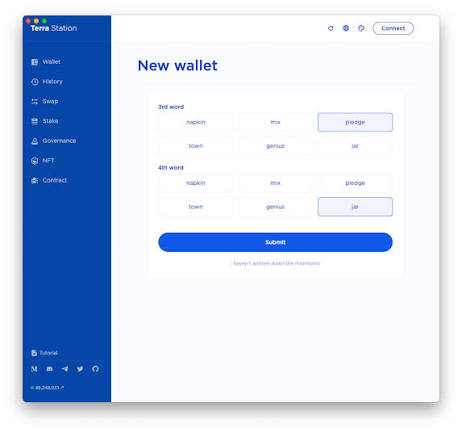
- Creating a new wallet account, which generates a seed phrase (recovery words)
- Or importing an existing wallet using a seed phrase
This step determines the identity behind your addresses. Without secure handling, you risk losing funds or exposing your keys.
B) Receive tokens
To receive tokens:
- Terra Station provides an address (sometimes with a QR code)
- You share it with the sender
- The sender broadcasts a transaction on-chain
- The wallet displays incoming funds after confirmation
C) Send tokens or interact with a dApp
To send tokens:
- You select the asset and enter the recipient address
- You choose an amount
- You review fees and the recipient carefully
- You sign the transaction
- You broadcast it and track status
To interact with a dApp:
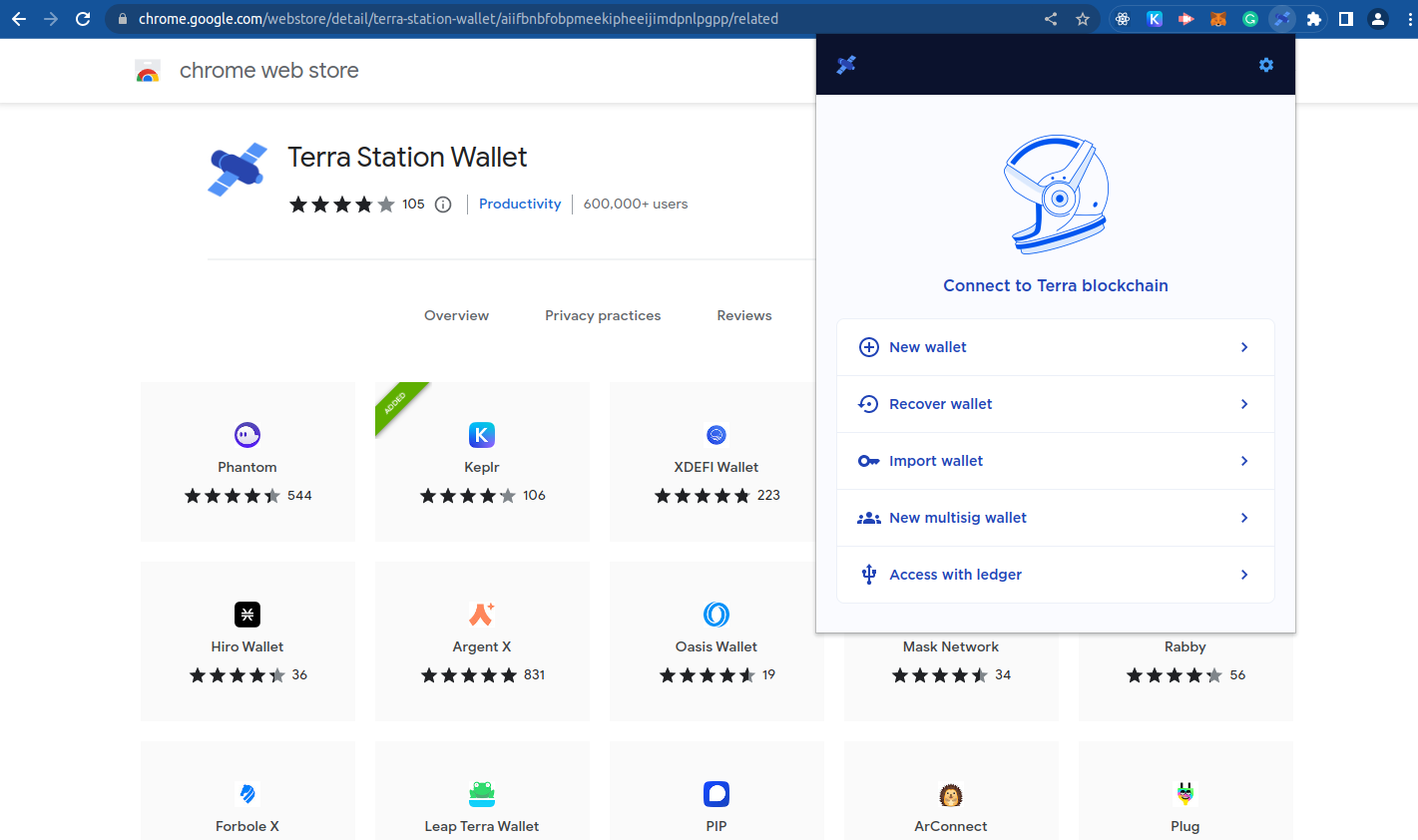
- You connect your wallet
- The dApp builds a transaction or contract call
- Terra Station prompts you to sign
- Once signed, the action occurs on-chain
D) View transaction history and balances
After transactions:
- Your balance updates
- Your activity appears in the wallet’s transaction list
- You can inspect transaction details to confirm outcomes
4. Security First: The Most Important Part of Terra Station Usage
Wallet safety isn’t just a “best practice”—it’s what determines whether blockchain usage is empowering or dangerous.
A) Seed phrase protection
Your seed phrase (recovery words) is effectively your master key. Anyone who gets it can control your wallet.
Best practices:
- Store it offline (paper/metal backup rather than screenshots)
- Keep it private and never share it
- Avoid entering it on random websites
- Be cautious of “support agents” who ask for it
If your seed phrase leaks, your assets can be stolen, and reversing that loss is often extremely difficult.
B) Beware of phishing and fake “support”
Common scams include:
- Fake Terra Station login pages
- Browser extensions that imitate wallet behavior
- Messages claiming you must verify your wallet urgently
- “Support” requests to share seed phrases or private keys
A legitimate wallet interface should never need your seed phrase displayed to you in normal operation. If a website asks for it, treat it as a red flag.
C) Confirm transaction details every time
Before signing:
- Check recipient address carefully
- Confirm token type/amount
- Confirm the network environment
- Review fees and expected effects
One wrong character in an address can send funds irreversibly.
D) Keep devices clean
Using a compromised device can be catastrophic. Malware or malicious extensions can:
- Capture clipboard data
- Modify transactions before signing
- Steal seed phrase entry
- Redirect to malicious signing flows
Security isn’t about one feature—it’s about your full setup: browser, device, habits, and verification.
5. Terra Station and dApps: How Connections Usually Work
Terra Station’s usefulness becomes much larger when you use dApps, because wallets are the bridge between:
- User intent (“swap token A for token B”)
- dApp logic (routing, swapping, staking)
- Blockchain execution (transaction signing and confirmation)
Connection flow (conceptually)
- You open a Terra ecosystem dApp
- Click “Connect Wallet”
- Terra Station requests permission
- You confirm the connection
- The dApp can now request signatures for specific actions
Signing prompts
Every meaningful action usually results in a wallet signature prompt. The wallet should show:
- What the transaction will do
- Token amounts or contract interaction details
- Network and fees
Treat signing prompts as “commitments.” If something looks off, don’t sign.
6. Sending, Receiving, and Managing Assets
Even if Terra Station includes a lot of extra features, the fundamental tasks remain:
Receiving assets
- Generate address/QR code
- Ensure correct token and network
- Wait for confirmations
Sending assets
- Double-check recipient address
- Ensure correct token denomination
- Watch for memo requirements (depending on asset/network specifics)
- Confirm gas/fees
Transaction status
Sometimes transactions are:
- Pending (broadcast but not finalized)
- Confirmed (included in a block)
- Failed (insufficient funds, wrong parameters, or rejected execution)
Terra Station should show status so you can interpret what happened. If your transaction is pending longer than expected, you may need to inspect the transaction on a block explorer (if available) to confirm final state.
7. Staking and Governance: Common Expectations
Many blockchain communities include staking or governance participation. Wallets like Terra Station often serve as the control panel for these actions.
Depending on the current Terra ecosystem state and tooling, you may find workflows such as:
- Delegating stake to validators
- Redeeming/unstaking
- Voting on governance proposals
- Delegation settings changes
Key point: staking and governance typically involve smart contract or protocol mechanisms where:
- There are rules about lockup periods
- There are risks related to network changes
- There may be penalties or missed rewards depending on validator behavior and protocol design
If Terra Station offers staking or governance features in your environment, the wallet usually provides transaction prompts and guidance. Still, you should understand:
- What you’re authorizing
- How rewards are calculated (if explained)
- What happens during unbonding/withdrawal periods
8. Fees, Network Costs, and “Why Did It Cost That Much?”
All blockchains charge something to process transactions. In many setups this includes:
- A base fee for transaction execution
- Additional cost depending on operation complexity (contract interactions, swaps, etc.)
In user terms, fees matter because:
- They affect how often it’s worth transacting
- They can make small transfers uneconomical
- They influence net returns from swaps or staking actions
Terra Station typically shows fees or provides an estimated cost in the signing flow. Before sending:
- Consider whether you’re paying network fees multiple times (for multi-step dApps)
- Compare whether doing a single action is cheaper than multiple actions
9. Multi-Asset and Token Management
Wallets are useful when they support more than one asset—especially in token ecosystems. Terra Station often includes token list features and balance displays, which may help you:
- Track multiple tokens in one place
- Identify which tokens you can send/receive
- View transaction history by token (depending on the UI)
But managing multiple assets also increases the chance of mistakes:
- Sending to the wrong token type
- Confusing token symbols or denominations
- Accidentally using an address that expects a different token format
A good practice is to verify asset and network assumptions before each transfer.
10. Common User Mistakes (and How to Avoid Them)
Mistake 1: Sharing the seed phrase
Never share it. Not with friends. Not with “support.” Not for “recovery.” No legitimate service needs it.
Mistake 2: Signing “approval” transactions blindly
Many dApps require approvals before spending tokens. An approval can allow a dApp contract to transfer tokens on your behalf. Always review approvals and understand:
- Which contract is being approved
- Which token is being approved
- How much allowance is granted
- Whether approval is necessary or can be scoped
Mistake 3: Using the wrong network
Some ecosystems have multiple networks or environments. If Terra Station UI offers network selection, double-check you’re on the correct one.
Mistake 4: Clipboard hijacking
Scammers may replace addresses in your clipboard. If you copy-paste addresses:
- Verify the first and last characters
- Prefer manual confirmation when sending large amounts
Mistake 5: Waiting too long to confirm what happened
If something fails, pending transactions shouldn’t be ignored indefinitely. Check:
- Wallet status
- On-chain explorer status
- Whether you need to retry with updated parameters
11. How to Choose the “Right” Wallet Setup (Practical Guidance)
Terra Station is more than a “pretty wallet.” It’s the interface layer that makes a blockchain usable in everyday life: it handles keys, enables signing, connects you to the Terra ecosystem, and provides the visibility you need to manage funds.
The biggest takeaway is simple: wallets give you power, but they also give you responsibility. If you protect your seed phrase, verify signing prompts, double-check addresses and networks, and approach dApp permissions carefully, Terra Station can be a reliable gateway to on-chain activity.
If you want, tell me which Terra Station context you mean (for example: Terra Classic vs another environment) and the kind of audience you’re writing for (beginners vs experienced crypto users). I can also restructure this into a more “blog-style” 2000-word article with headings, examples, and a step-by-step usage guide.
12. Conclusion: Terra Station as Your Operational Interface to Terra
Terra Station is more than a “pretty wallet.” It’s the interface layer that makes a blockchain usable in everyday life: it handles keys, enables signing, connects you to the Terra ecosystem, and provides the visibility you need to manage funds.
The biggest takeaway is simple: wallets give you power, but they also give you responsibility. If you protect your seed phrase, verify signing prompts, double-check addresses and networks, and approach dApp permissions carefully, Terra Station can be a reliable gateway to on-chain activity.
If you want, tell me which Terra Station context you mean (for example: Terra Classic vs another environment) and the kind of audience you’re writing for (beginners vs experienced crypto users). I can also restructure this into a more “blog-style” 2000-word article with headings, examples, and a step-by-step usage guide.
Things people ask about terra
1) What does terra mean?
terra stands for Decentralized Finance. It refers to financial services (like swapping tokens, lending, borrowing, earning yield) that run on blockchain networks using smart contracts, rather than traditional banks or centralized exchanges.
2) Do I need a lot of money to use terra?
No. You can start with a small amount. The main goal at the beginning is to learn how transactions work, how approvals work, and how to recognize fees, slippage, and the steps needed to enter and exit positions.
3) Is terra safer than keeping money on centralized exchanges?
Not automatically. terra can be safer in some ways (self-custody, transparent code), but it can also be riskier (smart contract bugs, liquidation, price volatility, complex interactions). The safest approach is to start small and understand the risks.
4) What is a wallet, and why do I need it for terra?
A crypto wallet is how you hold assets and authorize actions on the blockchain. In terra, your wallet:
- connects to apps (dApps),
- signs transactions,
- and controls approvals (permissions for contracts to spend your tokens).
Without a wallet, you can’t interact with most terra applications.
5) What does “connect wallet” mean?
It means your wallet lets a terra app know which account you’re using. Usually, the app can then ask you to sign transactions (like swapping tokens or depositing into a pool). Connecting is different from signing—connection is often just recognition; signing changes on-chain state.
6) What is a DEX?
A DEX (decentralized exchange) is a place to trade tokens without relying on a central company as the trader or custodian. Many DEXs use liquidity pools to enable swaps.
7) What is a liquidity pool?
8) What is impermanent loss?
9) What is “yield” in terra?
Yield is the return you earn from participating in terra, such as:
- swap fees in liquidity pools,
- interest paid by borrowers,
- staking rewards,
- incentives from a protocol.
But yield can change, and it often comes with risk or token price movement.
10) Is terra yield guaranteed?
No. Many things can reduce or eliminate yield, like:
- declining demand,
- lower trading volumes,
- reward token price falling,
- protocol changes,
- or changing interest rates.
Also, yield doesn’t necessarily protect your principal from losses.